The Composability of Ideas
Open source. Blockchain. MCP. Composability is the founding principle of the modern tech stack. I think it applies to ideas too. And that changes everything about how we build AI together.

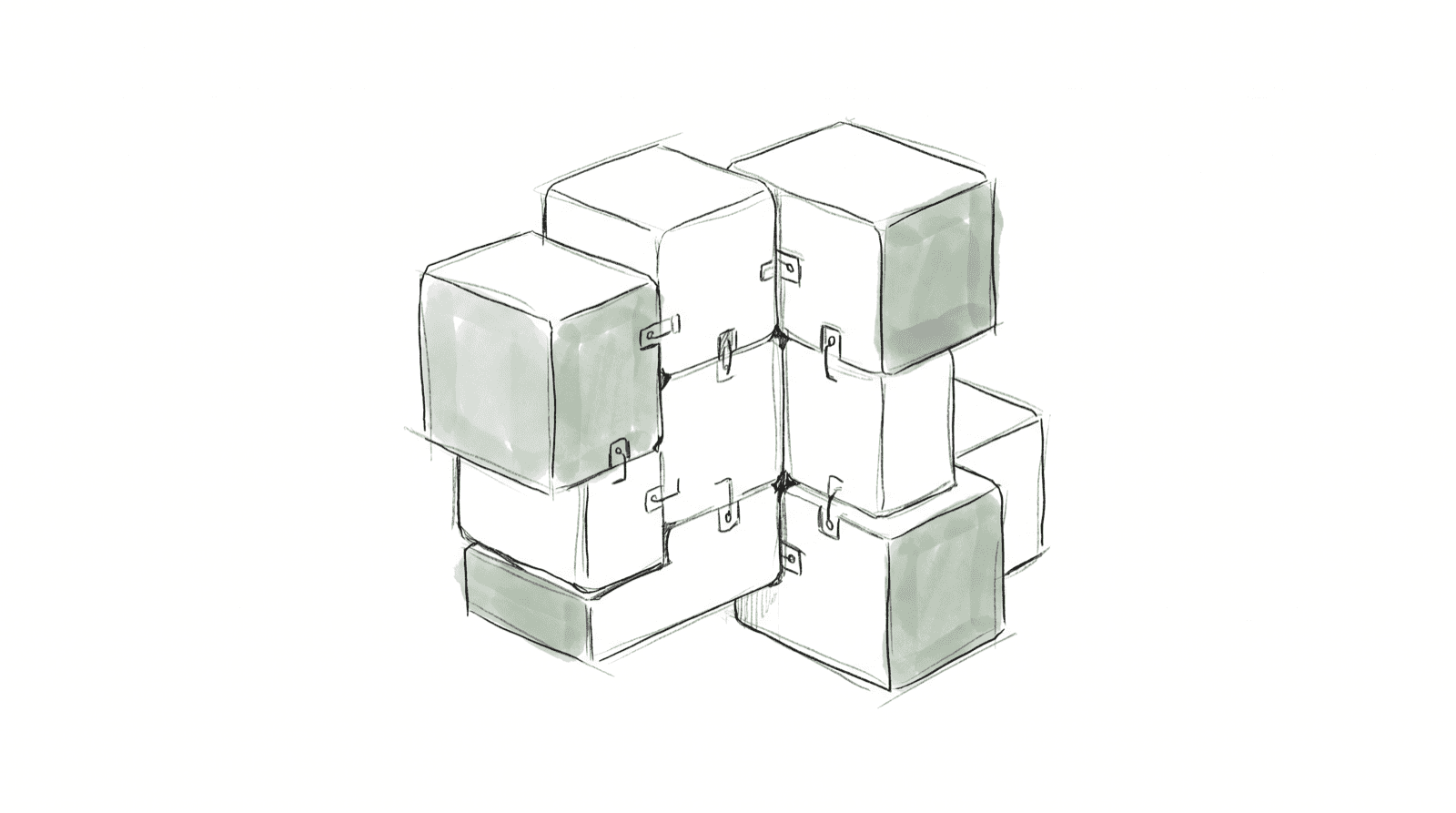
I have always been drawn to systems that build on top of each other.
Open source is one example. You take a library someone wrote, combine it with another, build something on top, and suddenly you have something none of the original authors could have imagined alone.
Blockchain is another. Assets and protocols from different chains can interact, compose, and unlock value that exists in no single system on its own.
MCP (Anthropic's Model Context Protocol) is the most recent version of this idea. It lets AI models connect to tools and data sources from completely different providers, combine them in real time, and produce results that none of those pieces could generate alone.
Composability is the founding principle of how modern technology grows: you don't build everything yourself, you connect the right pieces.
I think ideas work the same way
Here's what I think: composability isn't just a technical concept.
I think ideas themselves are composable.
When you talk to someone, they see the world differently than you do. They have knowledge you don't. A different frame. A different set of experiences. When you combine your perspective with theirs, something new comes out.
That's composability applied to humans.
I think we all have something to learn from each other, that every person carries a unique kind of knowledge, and that it's up to us to discover what it is when we talk.
Your accountant sees patterns in financial data you've never noticed. Your neighbor who grows vegetables knows things about soil and patience that translate into how you build a business. Your teenager has an intuition about social dynamics that you lost somewhere along the way.
The value is in the intersection, in the composition.
Sharing between humans is alive
There's something organic about the way humans collaborate.
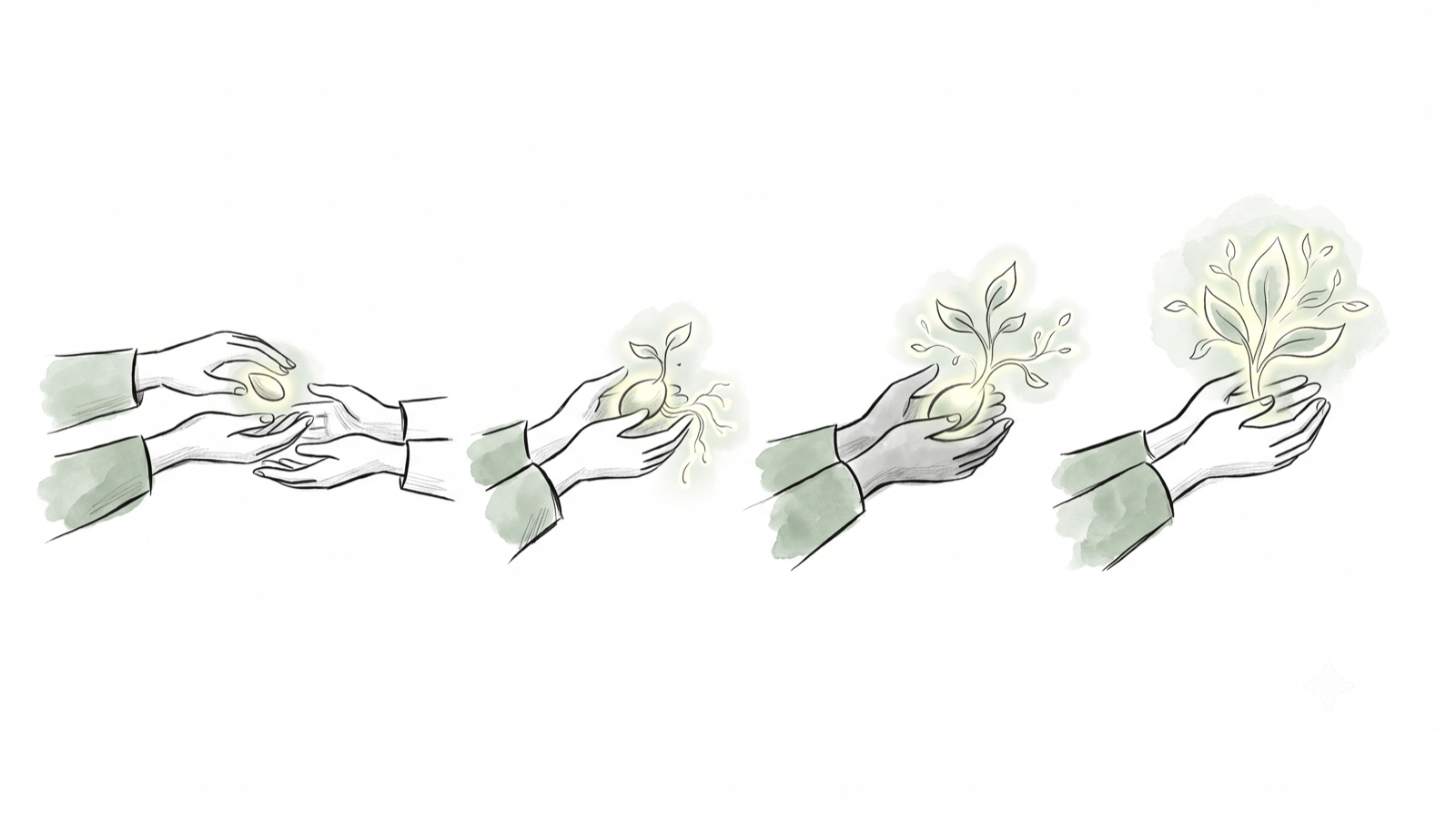

It doesn't happen through file transfers. It happens through conversations, through trial and error, through ideas we bounce back and forth that mutate along the way. Someone tells you something, you digest it, you transform it, you give it back in your own way. Knowledge circulates, blends, evolves. It's alive.
The way we use AI today has lost that. Everyone in their own chat, their own context, their own session that forgets them the moment they close it. It's efficient, and it's dead. No circulation, no mutation, no life.
I believe we have to bring that organic side of sharing back into how we use AI. Not knowledge frozen in a database, but knowledge that passes from hand to hand, that gets forked, that improves because someone else touched it after you.
That's the difference between a library and a living organism. And it's that living side we need to build into our tools, not just memory and storage.
This is the idea behind AskMojo
Most AI tools are built around a single user and a single stream of context.
You open a chat. You type. The AI answers. The context is yours, the results are yours, and everything lives in one session that forgets you the moment you close it.
That's the single-prompt model. It works for simple tasks. But it's missing something fundamental.
The real breakthroughs happen at the margins, where different contexts meet.
AskMojo is built around a different principle: community composability.
A gardening expert shares a workflow to analyze sun exposure. A second one shares one for plant pairings. A third, for seasonal prep. You combine all three in your own garden app. The results they produce are shaped by your specific garden, your specific location, your specific season. But the underlying knowledge is theirs.
It's a philosophy before it's a feature.
Why this is different from Lindy or HyperAgent
Lindy is excellent for task automation. HyperAgent is powerful for dev workflows. Claude (the chat interface) is the best general-purpose AI conversation tool I know.
But none of them is built around shared knowledge.
They're all designed for a single player. You and the AI. Your context. Your results.
AskMojo is different because it's explicitly multiplayer in its architecture. You can:
- Build an app that combines workflows from several creators
- Share an app with your family or your team, each person getting results adapted to their level
- Follow creators whose expertise you trust, and let their new workflows update your app automatically
- Fork someone else's app and make it your own
The community angle isn't a roadmap item. It's the core of why this exists.
The difference it makes
Imagine what happens in a traditional professional field when the best practitioners don't talk to each other.
Real estate agents in the same city use completely different valuation approaches. SEO consultants have entirely different frameworks for audits. Marketing consultants reinvent the same wheels every year.
Now imagine these practitioners could compose their best approaches into shared apps. Fork each other's methods. Discuss the parameters. Let the best approaches emerge through real use.
That's what standards look like before they become standards. It starts with composability.
It applies just as much to non-professional contexts. A family planning a trip together. Friends running a collective sports bet. A homeschooling community sharing the best explanations to teach kids history.
In every case, the best result comes from combining what each person knows, not from one person who would know everything.
But for ideas to compose, you need a format
There's a condition to all this. Ideas only compose if they're accessible.
A brilliant workflow locked inside a tool that only talks to itself is a dead end. You can't fork it, combine it, or let an agent read it. It dies where it was born.
That's the real trap of most AI tools today: your knowledge goes in, but it never comes back out in a reusable form. You rent access to your own knowledge.
That's why I hold to a simple principle: knowledge should live in an open format, readable by a human and by an agent alike.
Concretely, that means markdown. And markdown is dead simple: it's just text.

Not a proprietary format that needs specific software to open, not a file that corrupts or locks you in. Text you read effortlessly, and that an AI reads just as well. A few simple marks for a heading or a list, and that's it. The same file is understandable by a human and by a machine, with no translation between the two.
That's what matters: a format no one owns, that everyone can read, and that agents understand natively.
Google started formalizing this idea with OKF (Open Knowledge Format): a standard way to package knowledge so it's portable, versionable, and understandable by models. On AskMojo, it's the same logic. Your apps, your workflows, your context export to markdown and OKF, at the scope you choose: a public workflow to share, a folder for your team, or the full export to another agent.
And it works both ways. The same format that gets your knowledge out brings other people's in.
On one side, your own docs. You keep them in an open format so they stay yours, portable, and usable by any agent, yours today, another one tomorrow.
On the other, other people's knowledge. You import someone's documentation, a workflow, a playbook, field notes, and an agent reads it exactly like your own. It becomes raw material to build on.
Why is this central to composability? Because an agent can't draw on what it can't read. When your knowledge is in an open format, an agent can scan it, extract the patterns, and use it as a starting point to re-create something else. Someone else's garden workflow becomes the base of your vegetable-patch app. A consultant's audit method becomes the skeleton of yours.
You never start from zero. You start from what already exists, and you recompose.

If you know GitHub, you get the idea. Developers don't write every line of code on their own: they start from someone else's repo, fork it, adapt it, and send it back improved. Code progresses because it's shared and recomposed constantly.
What's missing is the equivalent for knowledge. A place where your knowledge lives in an open format, where it can be forked like a repo, built upon, and handed back to you as a better version. That's what we're building: the GitHub of AI knowledge. Except this time, it's not just for developers. It's open to anyone who has something to share.
It's the opposite of lock-in. Your knowledge stays yours, in a format you take wherever you want. And precisely because it's accessible, it can feed other people's ideas, the way theirs feed yours.
What I'm building
I'm not building another AI chat tool. I'm building a layer on top of AI where knowledge composes.
Where your garden app gets better because someone who knows more about soil than you published a workflow this morning.
Where a parent building an app to explain volcanoes to a 10-year-old can plug in the workflow a science teacher in Lyon published last week.
Where a consultant who spent years refining her audit method publishes it, and a peer picks it up for their own sector, adjusts a few parameters, and hands it back better.
That's the composability of ideas: a real product feature you can actually use today.
If this is the kind of AI ecosystem you want to be part of, start building your app.
Build your first lab
Tell Mojo what eats your time. He builds you a lab that does it, wired to your tools. Yours to own and export.