We Are Back to the Early Web. Except This Time the Specialists Are Agents
In the early web, one person did every job. AI brings that role back, but the specialists are agents now. How to orchestrate them and judge their work.

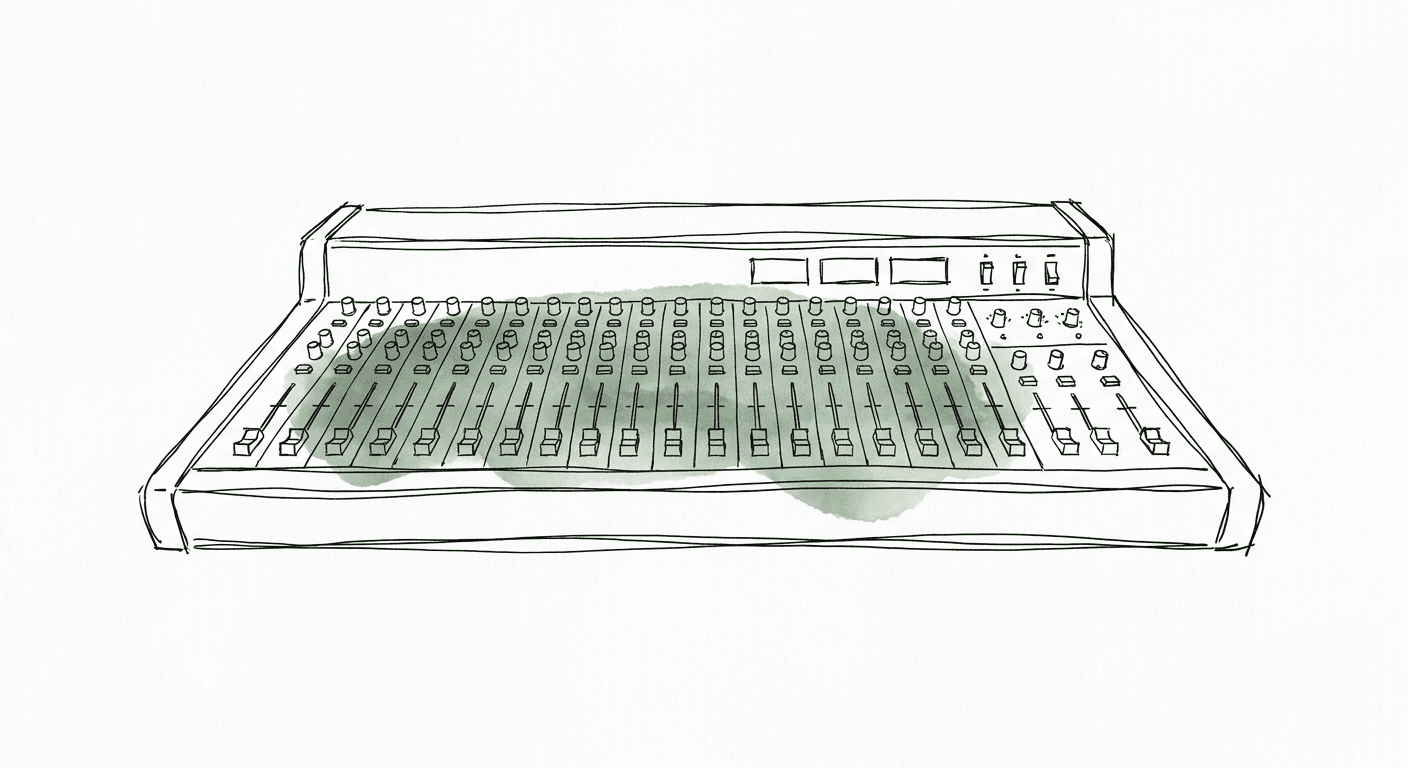

In the early days of the web, every company wanted the same person.
One human who could code the site, design it, write the copy, run the database, send the emails, and hold the community together. We called them the webmaster. The web was so nebulous that nobody hired a team. They hired a guy. Building a website back then meant doing communication strategy, community management, email marketing, database administration, and graphic design, all at once, all in one slightly overwhelmed head.
I was that guy. I did five jobs at the same time, and I did most of them badly.
I have been thinking about this a lot lately, because the job is coming back. Not as nostalgia. As the shape of work for the next decade. And the version returning is stranger and more powerful than the one I lived through.
I have seen this shape once before
For a company, the way you build and communicate online has been rewritten twice. Once at the start of the internet. And now, with AI.
A lot happened in between. Social media was a real wave, and it changed plenty. But it did not reorganize how a company's communication actually works, the way the early web did and the way AI is doing now. Some shifts add a channel. These two rewrite who does the work.
The first time, the medium was so new that companies hired one person to hold all of it. The webmaster did everything. Then the web settled, the stakes rose, and the work specialized. Designers, SEO specialists, copywriters, growth marketers, community managers. Each carved out a discipline and went deep, because one human cannot hold real depth in five trades at once.
I lived that arc from the inside. I was the webmaster who did everything, badly, and I watched the specialists take over one trade at a time.
Now it is happening again. AI is the new nebulous medium, and companies want one person who can do everything with it. Specialization is already starting to return. The difference this time is where it lands. Not in new human job titles. Inside the tools.
The difference: the specialists are not human anymore
The webmaster did each job poorly for a simple reason. There are only so many hours, and craft does not fit in a weekend.
Today the generalist is back, but the multiple kinds of depth no longer live in one exhausted person. They live in agents. Each agent goes deep in one trade. One human orchestrates them.
The best AI worker today is the early-web webmaster, except his specialists are agents.
That single swap breaks the old pattern. The reason specialization used to push the generalist aside was simple: one human could not hold real depth in five fields. That constraint is gone. You can now hold depth in five fields without being deep in any of them yourself, because the depth sits in the things you direct.
I am not fully sure where this lands. I am noticing it, and I am building on the assumption that it holds. But the early evidence is hard to ignore.
It is not a flat world of solo generalists. It is two tiers, and it is composable
This is where most takes on the one-person company go wrong. They picture a flat future where everyone is a lone generalist with a swarm of bots. That is not what I see forming.
What I see is two tiers, connected by sharing.
At the top, the generalist-orchestrator. They compose across trades. They no longer go deep in any single one. They go deep in direction.
Below them, a layer of re-specialized humans who go deep in one trade, now amplified by their own agents. The AI-native copywriter. The agent-ops engineer. The person who knows one thing cold.
The thing that ties the two tiers together is composability. Nobody builds from zero. The specialist who goes deep does not keep that depth to herself. She packages it. A consultant publishes the audit method she spent years refining. A growth marketer shares the workflow that actually moves a launch. The orchestrator on top does not reinvent any of it. He pulls in what others already earned, adapts it, and hands it back sharper.
This is the part I find most interesting, and it is bigger than AI. What gets shared is not just AI prompts and model tricks. It is human expertise, encoded into workflows other people can build on. One person's hard-won craft becomes another person's starting line. Knowledge stops being something you hoard and starts being something you fork. The early web never had that cleanly. This phase does.

When agents do every trade, what is left for the human
If the agents carry the expertise, the honest question is what the human is even for.
The answer is not the doing. It is knowing what should exist, and why.
The orchestrator is the only one in the room who holds the intention. Agents supply the how of every discipline on demand. The human supplies the what and the why. Direction over execution. Intent over output.
And here is the subtle part. The agents you direct are not neutral. Every one of them is built on someone else's intention, knowledge, expertise, and polarized convictions. An agent is a point of view, encoded. When you pull in a copywriting agent a great writer shaped, you are inheriting their taste and their opinions about what good writing is. When you compose three experts' workflows into one system, you are composing three sets of convictions.
So the human job is two things at once. Choose whose encoded expertise to build on. Then lay your own intention on top of all of it. Taste in what you pick. Direction in what you make it do. Neither of those delegates. That is the residue when the execution disappears, and it turns out it was always the valuable part. The execution was just the only thing we could see.
The rule that keeps an orchestrator from being a fraud
There is a trap in all of this, and it is worth naming plainly.
You can only direct an agent in a trade you have earned at least once, or a trade someone you trust has earned and can judge better than you.
Not because you need to do the work. Because someone needs to be able to judge it. I can direct a design agent today because I once hand-coded the ugly version myself and felt every mistake. I know where the bodies are buried. When I cannot earn a trade myself, the move is not to fake it. It is to borrow judgment from a person I trust who can tell good from bad in that field. Borrowed judgment is real judgment, as long as the trust is real.
So there are two honest paths, and only two. Go do the job badly yourself, at least once, so you can evaluate the output. Or find someone you trust to be your judgment in that trade. What you cannot do is direct an agent in a field where neither you nor anyone you trust can tell whether it is lying to you. That is not orchestration. That is a junior with a bigger budget, accepting outputs no one in the room can check.
Why I am building what I am building
I keep coming back to the workshop.
The early-web webmaster needed somewhere to assemble the whole thing. A text editor, an FTP client, a CMS, a hosting account. Humble tools that let one person hold a full site together.
The orchestrator needs more than tools. He needs a place to find the experts who already earned each trade, take the workflows and tools they recommend, and compose them into a team. Not a swarm of generic bots. A team built out of other people's best, hard-won work.
That is the thing I am building. The plain way to say it is the GitHub of AI systems. The truer way to say it is a place where you find expertise, fork it, and compose it into something better than you could build alone. You do not start from a blank prompt. You start from what an expert already shared, you lay your intention on top, and you assemble a team of workflows and tools instead of a stack of plugins.
I did not start this because I wanted to add another AI tool to the pile. I started it because I lived the first version of this job, alone, doing five things badly, with no one's shoulders to stand on. I want the second version to be better than the one I had.

What I would do this week
If any of this rings true, here is the move, and it is small.
Pick one trade you do not know how to do. Direct an agent through it, end to end. Watch where it goes wrong, and notice something uncomfortable: in the places where you never earned the craft, you cannot actually tell whether it went wrong. That gap is the map of what you still need.
Then pick one trade you do know cold. Direct an agent through that one too. Notice how sharp your judgment is, how fast you catch the mistakes, how clearly you can say what good looks like.
The difference between those two feelings is the whole skill.
And when the gap points at a craft you genuinely need to hold yourself, here is the good news most people miss. AI is one of the best ways ever invented to actually learn it. Ask it to teach you, to give you exercises, to make you do the reps. Use it as a tutor, not a vending machine. The trap is the opposite move: demanding more and more outputs in a trade you have not earned and cannot judge. Do not ask for more outputs when what you actually need is to learn the craft. Slow down and learn it, with AI as your teacher, or borrow the judgment of someone who already has it.
The future does not belong to the person who can do everything. It belongs to the person who knows what should exist, why it matters, whose expertise to build on, and whether the thing in front of them is good enough to ship.
That person was the webmaster in the early web. It is the orchestrator now. I am fairly sure it is the same person, older, finally with a team that can keep up.
Build your first lab
Tell Mojo what eats your time. He builds you a lab that does it, wired to your tools. Yours to own and export.